Start with what you are buying
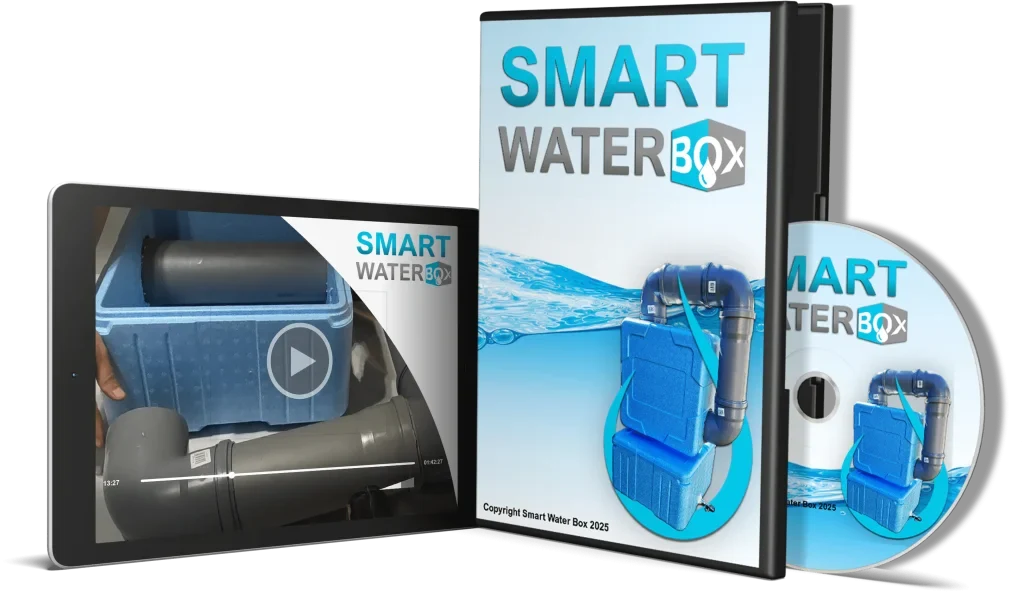
The most useful first question is simple: what arrives after you pay? The seller describes an instructional product. The supplied artwork shows a guide, a video presentation, and bonus materials. Those images help explain the format, but they do not establish that a complete machine, physical DVD, tablet, or construction kit is shipped with an order. [source]
Think of the decision in two parts. First, decide whether the information offered is useful to you. Then decide whether the project described is practical for your home. The cost of learning about a system and the cost of building and maintaining it are different commitments.
Before paying, check the current checkout description for the exact deliverables. If something is unclear, ask the seller to confirm it in writing. Our guide-contents page explains what is visible in the promotional materials and what a buyer should confirm.
| What to check | Why it matters |
|---|---|
| Purchase format | Know whether you receive digital access, downloadable files, or anything physical. |
| Parts and tools | Do not assume hardware is included in the guide price. |
| Operating requirements | Understand the proposed source of cooling, airflow, and power. |
| Evidence | Look for measured results tied to a specific design and operating conditions. |
| Support and refunds | Keep the seller’s support route and your order receipt. |
Could this project fit your plans?
A DIY guide may suit someone who enjoys comparing designs, sourcing parts, following instructions, and documenting a project. It may also appeal to a reader who wants to understand the idea before deciding whether a more complete commercial system is appropriate.
A guide is a less suitable purchase if you expect a ready-to-use appliance, need guaranteed output immediately, or have no interest in assembly and maintenance. A useful decision does not depend on enthusiasm alone. It depends on whether the next steps match your time, budget, skills, and expectations.
Write down your intended use before you compare options. A learning experiment has a different success condition from a household drinking-water supply. For an experiment, you may be interested in observing collection and measuring energy. For drinking water, collection is only one part of a much larger quality and reliability question.
Avoid making an urgent water-supply decision around an untested build. Keep an established source of safe water while investigating a project. The emergency water planning guide helps separate immediate preparedness from longer-term experimentation.
Understand the idea behind collecting water from air
Atmospheric water collection uses moisture already present in surrounding air. Common systems cool an air-contact surface so vapor can condense. Temperature, humidity, equipment design, and operating energy affect collection. That general principle does not establish the performance of Smart Water Box. [source]
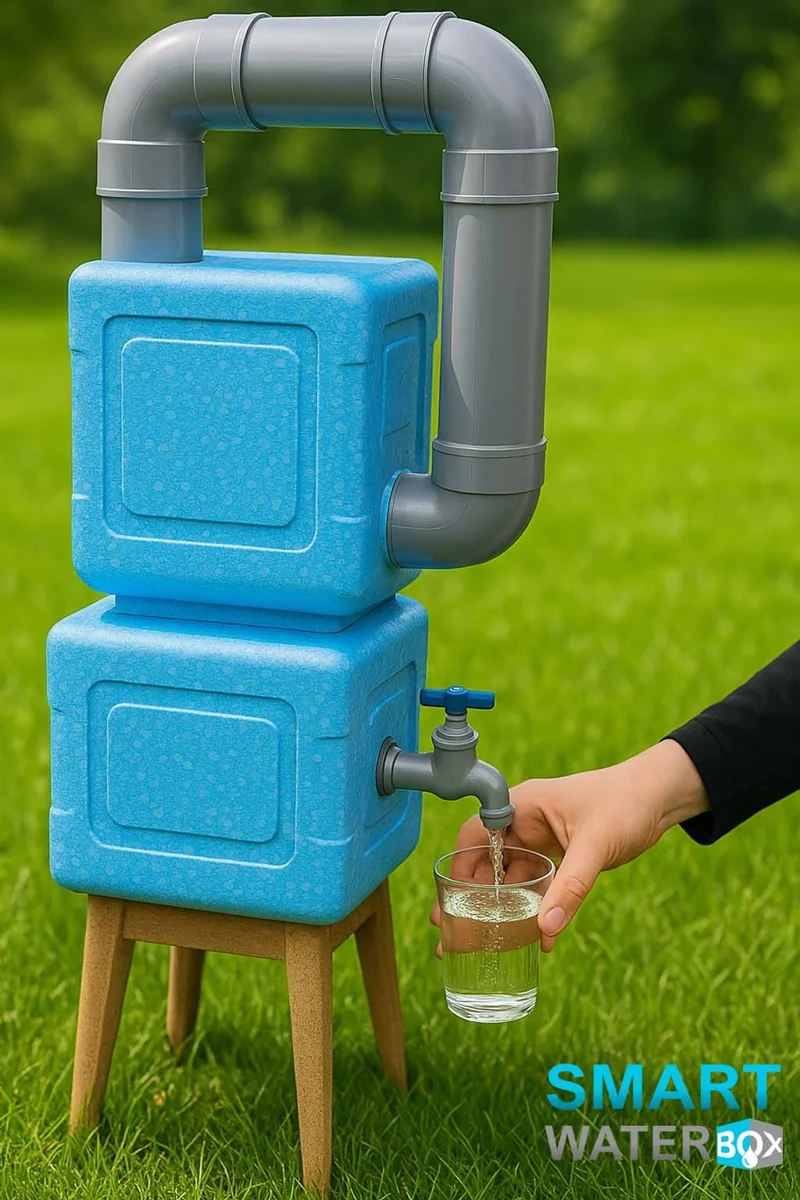
A useful explanation should identify what moves the air, what maintains a sufficiently cold surface, where the collected liquid goes, and what happens before it reaches a user. A promotional photograph cannot answer all of those questions. In particular, the presence of a fan or pipe does not by itself explain the cooling process.
When a seller describes continuous production, ask for the full operating conditions. What temperature and humidity were measured? For how many hours? How much electricity or other energy was used? Did the reported quantity include water that later needed to be discarded?
Read how Smart Water Box is presented alongside the general introduction to atmospheric water generation. The first concerns the offer; the second explains the broader technology.
Separate the guide price from the project budget
The price on a sales page is only useful if you know what it covers. Check the final checkout total, currency, any taxes, and each item you accept. We have not independently confirmed a current checkout price for this affiliate route, so this site directs you to the current offer instead of displaying an unsupported number.
For the wider project, prepare a budget with separate lines for components, tools you do not already own, shipping, suitable containers, treatment equipment if required, independent testing, electricity, and replacements. You may not need every item in every design, but omitting categories before inspecting the plans can make a project appear cheaper than it is.
Put an evidence note next to each estimate: a written parts quote, an equipment label, a laboratory quote, or your own calculation. A total assembled from those entries is more useful than a single promotional claim about how cheaply a system can be built.
Use our Smart Water Box price and cost guide to review the buying total, then the project-budget article to plan the separate build.
Check Current PriceWhat counts as evidence?
Different sources answer different questions. A seller page can explain what the seller offers. A receipt can confirm what you bought. A published study can explain what happened in the design that was studied. A laboratory result can describe the particular sample it tested. None of these should silently substitute for another.
We have not built or tested Smart Water Box, inspected the full paid guide, or verified independent performance data for the specific project. The seller’s own page describes the project as experimental and not technically assessed. That limitation belongs in a buying decision. [source]
If performance evidence becomes available, evaluate the model, components, test procedure, operating conditions, duration, and measurement method. A result for an industrial atmospheric water generator cannot simply be transferred to a homemade device with different materials and controls.
Our technical-review policy explains the standard used here. We do not display invented star ratings, customer counts, expert endorsements, or claims that an agency has approved this product.
Water collection and drinking-water safety are separate questions
A container filling with clear liquid demonstrates collection. It does not, on its own, establish drinking-water quality. Decisions about treatment and testing should be based on the complete water path, its materials, the local environment, and qualified advice.
Treat water safety as a project requirement from the start. Before using a proposed supply for drinking or food preparation, discuss the design and appropriate testing with a qualified drinking-water professional or local health department. Do not rely on taste, appearance, or a simple dissolved-solids reading to approve a source.
Read the Smart Water Box safety guide for the questions to raise. The water-testing article explains how to prepare for a conversation with a laboratory. These pages are educational and do not certify any build.
Check the current refund terms before paying
The seller currently publishes a 60-day refund period and lists support@watersmartbox.com for requests. That is seller-reported policy, not a refund promise made by this independent site. Confirm the terms attached to your own order and keep the receipt. [source]
Review the purchased material promptly. If you discover that the format, requirements, or scope do not fit your needs, use the verified support route rather than waiting until the end of a refund period. Avoid sharing full card details in an email.
A refund on the digital product should not be assumed to reimburse separately purchased hardware, tools, testing, labor, or operating costs. Read the refund and support guide before committing to those extra expenses.
View the Current Purchase PageA simple path to an informed decision
- Check the exact contents of the digital offer.
- Review the project requirements and your intended use.
- Prepare a separate build and operating budget.
- Ask for evidence behind any output or savings claim.
- Arrange appropriate safety advice before drinking collected water.
- Confirm checkout details, retain your receipt, and review the material promptly.
You do not need to settle every engineering question before learning more about the offer. You do need to recognize which questions the presentation answers and which remain open. That keeps curiosity useful and makes the next decision more manageable.
Start with the buying guide if you are ready to inspect the offer, or browse the learning center if you want to understand the technology first.
Choose the part of the decision you need help with
Readers arrive with different questions. Someone who has just seen a promotional video may need to understand whether the offer is a machine or a set of instructions. Someone who already understands the format may want to compare the project commitment. Someone who has purchased may need the seller's access or support route. Those are separate tasks, and the site is organized to help you reach the relevant information quickly.
If you are still identifying the offer, begin with the guide-format page. It separates what the supplied artwork depicts from what the current order description needs to confirm. If you are deciding whether to buy, use the ordering guide to review the destination, selected items and transaction details. If your question concerns the wider project, start with requirements and costs before assuming a low guide price describes the whole commitment.
Existing buyers should keep the receipt and access instructions together. This publication does not control the seller's files or order system. The access page explains what to check and how to distinguish an access problem from a technical question about the instructions. A clear question directed to the right organization is usually more useful than searching through unrelated promotional pages.
If the information format fits your needs, inspect the seller’s current offer and terms before deciding.
View Current OfferWhat useful educational value would look like
A DIY guide can have value as information even when the reader decides not to build. It may help explain a process, organize the questions to ask or reveal that a project requires more work than expected. That educational value should be evaluated from the material actually supplied, rather than inferred from a dramatic image or an ambitious output claim.
Look for a clear contents structure, defined terms, a current materials list, consistent diagrams and an explanation of the proposed operating cycle. Useful instructions should make their prerequisites visible. If a step assumes skills or professional judgment, the reader needs to know that before treating the step as an ordinary household task. Attractive presentation helps readability, but it cannot replace missing specifications.
We have not opened the paid Smart Water Box guide, so these are criteria for your review rather than features we claim to have confirmed. Ask which items are included, then check the actual files after legitimate access. A chapter title alone does not establish that a subject is covered thoroughly. Follow one component from the parts list through the diagrams and operating instructions to see whether the material gives a coherent account.
Keep the information purchase within a budget you are comfortable spending on learning. Do not make the later build automatic. Reviewing the material can lead to building, seeking qualified advice, comparing another option or deciding that the project is not a fit.
Compare three practical reader situations
Consider three invented situations. Alex enjoys documenting small technical projects and wants to learn how to assess a water-collection claim. Morgan expects a finished appliance that can be installed with manufacturer support. Riley needs a dependable supply during an immediate household disruption. All three may encounter the same advertisement, but they should not make the same decision from it.
Alex can evaluate the guide as educational material and set a separate checkpoint before buying parts. Morgan should confirm the deliverable immediately, because instructions and an assembled appliance are different purchases. Riley should use relevant emergency guidance and established arrangements for the immediate need rather than depend on an unverified future build. These examples illustrate decision boundaries; they are not customer stories or testimonials.
The useful question is which situation resembles your actual goal. If your goal changes after reading the offer, update the requirements instead of retaining the original shopping assumptions. A project that is interesting as a weekend study does not automatically become suitable for daily reliance. A guide that is inexpensive compared with equipment does not automatically supply the equipment's capabilities.
Write your intended outcome in one sentence. Add the time available, the amount you are willing to commit and the evidence you would need before expanding the project's role. That short note makes it easier to evaluate the next page you read.
Keep a project record before the first hardware order
A project record can be a folder with five items: the actual instructions, a configuration sheet, a budget, a question log and a measurement plan. It does not need specialized software. Its purpose is to keep the proposal you are evaluating separate from ideas collected from unrelated videos, forums and product listings.
The configuration sheet identifies the current document version and the parts it actually specifies. The budget records confirmed quotes, estimates and unresolved amounts. The question log identifies the instruction or claim that needs clarification and keeps the reply with it. The measurement plan states what you intend to observe and what that observation would establish. None of these documents turns an unreviewed design into an approved system; they make the remaining work visible.
For example, a supplier may offer a part that looks similar to the one pictured in the guide. Record the proposed substitution as a question rather than silently changing the design. Physical fit does not by itself establish that the new component is suitable. If the substitution affects an important requirement, obtain the appropriate clarification before purchase or assembly.
This record also makes it easier to stop. If the requirements are incomplete or the costs exceed your limit, you can identify the reason and postpone the next commitment. Money already spent on information does not require you to continue with an unsuitable project.
Understand a cost example without treating it as a quote
Suppose a fictional project sheet includes $45 for information, $180 for components, $50 for tools and $125 for initial professional services. The identified initial subtotal is $400. These are invented inputs used only to show how a budget works. They are not Smart Water Box prices, required spending or estimates of services in your location.
Now suppose shipping and ongoing requirements are unresolved. The complete cost is not $400 all-in. It is $400 in identified scenario expenses plus the unresolved categories. A contingency line may help plan spending flexibility, but it does not provide a missing technical specification or establish that the selected parts are suitable.
Operating calculations need the same discipline. If a hypothetical session consumes 2 kWh and the entered rate is $0.20 per kWh, the electricity calculation is $0.40 for that session. It does not describe total ownership cost, water output or savings against another supply. Those conclusions need additional information and a fair comparison.
The cost guide expands these distinctions. Use current written quotes for actual buying decisions, preserve the currency and date, and keep example figures clearly separate from confirmed amounts. A transparent incomplete budget is more useful than a confident total built from assumptions.
Learn how to read a result before relying on it
A useful performance record identifies the exact configuration, observation period, conditions and method. Ask where collection was measured, which energy inputs were counted and whether the reported quantity was observed or projected. If a one-hour result is multiplied into a daily figure, the arithmetic should be labeled a projection rather than an actual day-long test.
A fictional example makes the boundary clear. Collecting 0.25 liter during 30 minutes does not prove that 12 liters will be available every day. That projection assumes the same rate for 24 hours, with no relevant change in conditions or operation. It also says nothing about whether the collected water meets the intended use. The example is not a Smart Water Box measurement.
Look at less favorable observations as well as the strongest one. A result that omits downtime or missing data may not describe the period relevant to your needs. If the evidence comes from a different machine, keep that identity attached. General research can explain why a question matters without answering it for this specific guide.
Our measurement article provides a record structure and worked arithmetic. It does not replace qualified technical review or establish a product-output guarantee. Its aim is to help you recognize what a result supports and what still needs investigation.
Know who handles each question
Questions about current contents, access and the seller's published terms belong with the product seller or the transaction-support route identified by the order. Questions about a proposed build may require someone qualified to assess the actual design. Questions about water suitability may require a certified laboratory, relevant public-health service or drinking-water professional. These roles should not be treated as interchangeable.
A seller's prompt answer to a missing-download problem is useful support, but it does not establish an engineering assessment. A laboratory report can address the submitted sample and analyses, but it does not decide which digital package you purchased. A general article can explain a calculation, but it cannot inspect your components remotely or approve a proposed installation.
This site is an independent publication by Smart Water Box Guide. It is not the seller, and its purchase buttons use an affiliate link. We may receive a commission from an eligible referral. That relationship is disclosed so you can judge the information with the commercial context visible. It does not give us control over checkout, delivery or refunds.
For the sources behind the editorial material, see the references page and the source links attached to individual articles. Each source has a limited purpose; none should be interpreted as an endorsement of Smart Water Box unless it explicitly makes that claim.
Leave with a concrete next step
If you are interested in the information product, your next step is to inspect the current offer and resolve any essential question about the deliverables or terms. If you are interested in the technology, choose a learning article that answers the specific concept you need. If you are considering a build, obtain the actual specifications and decide what qualified input is required before committing to parts.
Avoid trying to resolve everything from the homepage. The learning center contains separate guides on budgets, climate observations, energy calculations, evidence, testing questions and preparedness. Their examples are intended to make the decision more understandable, not to supply an unverified construction recipe or a universal safety assessment.
Keep the distinction between interest and reliance. You can be curious about water collection without assuming it will replace an existing supply. You can consider a guide without agreeing to every promotional claim. You can decide against a build after learning more and still have made a useful information-gathering decision.
Before paying, check the product identity, current total, selected items, access requirements and terms on the actual purchase route. Before building, check the requirements and unresolved questions. Before relying on a proposed supply, seek evidence appropriate to that role. Each stage deserves its own decision, and none needs to be rushed by the appearance of the product artwork.
Questions, answered.
Is Smart Water Box a complete machine?
The offer is presented as a DIY instructional guide. Confirm the exact deliverables at checkout; do not assume the pictured equipment or devices are included.
Does this website sell Smart Water Box?
No. This is an independent affiliate information site. Purchase buttons open the seller’s offer through an affiliate link.
Is a daily water quantity guaranteed here?
No. We have not verified output for the specific project, and this website makes no production or savings guarantee.
Where can I check the current price?
Use the Check Current Price button, then review the final price and selected items on the seller’s checkout page.
References
Sources checked for this edition. Their scope does not establish approval of Smart Water Box.
- Smart Water Box — seller presentation (affiliate link)
Seller information is a commercial source. This link uses our affiliate referral; we may earn a commission from an eligible purchase. - EPA — Atmospheric Water Generation Technology (2019)
- Smart Water Box — seller refund terms